My journey
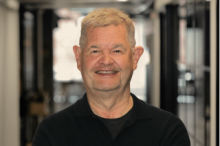
Introduction. I’m Ian, aged 64, and I had a double lung transplant on 9 January 2025. My operation went well, but I spent eight months in hospital in post-op care and recovery due to catching Sepsis once and Pneumonia twice, and some other less toxic infections along the way.
Due to the high risk of spontaneous viral mutation and localised infection, I was in ICU and CTU for the majority of my 236 nights stay. I outstayed my welcome, but the care provided was loving, personal and emotionally supportive for me and my family throughout.
I got deeply involved in understanding my care strategy, the clinical pathway, and the total patient journey. Here’s my story, shared to give those on the waiting list an insight. First, let me give you some context.
Life before transplant.
In July 2019, I was walking my dog on the beach in Deganwy, North Wales, where my wife Susan and I lived, when I suddenly became breathless. My fingertips turned a luminous shade of blue, and my lip colouring resembled a fresh plum. Susan, seeing me gasping like a landed cod, whipped me straight off to Bangor Hospital A&E. My vital signs were rubbish, most concerningly my blood oxygen saturation level, which sat at a crisp 78%. After three days of diagnostic chaos involving squeaky blood pressure cuffs and intense staring and whispering by doctors, I was diagnosed with Idiopathic Pulmonary Arterial Hypertension, a rare, progressive condition in which the blood vessels in the lungs steadfastly refuse to absorb oxygen. Not helpful. I left the facility three days later tethered to an ambulatory oxygen supply: imagine two scuba diving cylinders mounted on an ergonomic hiking backpack, plastic pipes up my nose. The medical prognosis was delivered with crisp, unvarnished efficiency: five years max.
Over the next five years, my pulmonary architecture deteriorated as predicted. I had three-monthly visits to the special Vascular Unit at the Royal Hallamshire Hospital in Sheffield for tests, treatment and medication. The irony was that I had spent three years 1981-1984 walking past this hospital whilst at University. I remained Idiopathic - undiagnosed. My oxygen consumption scaled exponentially. From having a cylinder last 3 hours and needed only for walking, I was on oxygen 24/7 by late 2024. The house was essentially a compressed oxygen storage facility, with three concentrators in the living room, hall and bedroom, the size of small fridges, whirring continuously and drowning out the sound of the seagulls. Having been told the medication and oxygen could not suppress the deterioration in my condition any more, the next step was to consider a lung transplant. Cue hours googling and wow, big job.
Being on the waiting list.
This led to a rather illuminating and startling conversation with the team at Wythenshawe. They made zero attempt to sugarcoat the stark reality:
- The procedural risks were high.
- Recovery would be a grueling long-term multi-stage process.
- Immunosuppressive drugs would wipe swathes of my short-term memory.
- Some risk to future nerve functioning
- A nine-day medically induced coma post-op would induce muscle atrophy, requiring me to relearn basic physical motor functions, such as holding a fork and walking.
They were spot on...
Organ Assessment, Screening, and Recipient Matching. Next up was three days of rigorous eligibility screening, which included stress tests on several body organs, cognitive assessments, blood test galore, multiple x-ray and CT scans and psychological evaluations, My emotions were further scrambled by the death of my mum on the final day of testing. I was going through a lot.
I passed the screening and advanced to the next milestone, the National Organ Match Waiting List. The average waiting period for a compatible set of donor lungs is two years. I received my notification call in two weeks, so I didn’t have much time to think about being on the list. When a potential matching organ becomes available, the recipient is notified of a match on paper. I got a phone call at 730am on Wednesday and we scooted off to Manchester. Twenty four hours later I was in surgery. Validating compatibility requires an intense, time-critical medical screening process for both the donor organ and the recipient. I was told the donor organs were a match. Did I want to proceed? I didn’t need to think about it.
I was euphoric about the short time I’d been on the list, obviously nervous, but totally committed to having the transplant.
Be brave and bold at this time of uncertainty, for yourself and your loved ones.
The surgery.
Apparently I went into surgery at 430am. I say apparently as I have no recall, the drugs given to me pre-op retrospectively wiped out any recall of the journey from home to hospital, calls to friends along the way, the 24 hour wait with the family in hospital, and going into theatre. Nine days later, emerging from an induced coma, I discovered I was incapable of moving my fingers, arms, or legs or able to speak. Extreme muscle wastage had slashed my body mass from 100kg to 85 kg. Furthermore, severe pharyngeal paralysis (my swallowing muscles and reflex had packed up) meant I was classified as strict Nil By Mouth for the next eight months, receiving all meds, hydration and nutrients via a nasogastric tube, which was later replaced by a direct percutaneous endoscopic gastrostomy feed directly into my stomach. Not pleasant. This wasn’t expected and was quite traumatic as I was told I may never eat and drink normally again. I deliberately necked my first pint of Guinness down in one gulp when I proved them wrong!
Recovery.
I entered an intensive regime of daily physiotherapy, relearning how to sit up in bed, balance, and take my first tentative steps. Three weeks post-operation, I finally regained sufficient motor control to pick up my smartphone from the bedside tray. However, the heavy load of neuro suppressants had wiped out elements of my memory. I stared at the touchscreen with bewilderment, having completely forgotten what a swipe gesture was or how to unlock the device.
You have to get comfortable listening to complex medical discussions around your bed about yourself and frequent changes in medication. It can be unsettling but the folks are essentially experimenting to find the right combination and doses to fix your unique circumstance. They share everything with you and your family and fully engage at all times, which I appreciated. While the surgical operation remains intensely hands-on - my own procedure lasted ten hours, executed by a team of twelve working across three shifts, the tech and data driven decision making is really interesting. I felt insanely relaxed and secure that my life, quite literally, was in safe hands from admission to discharge. Not sure my family felt so relaxed, but the transplant team looked after them too.
Physiotherapy.
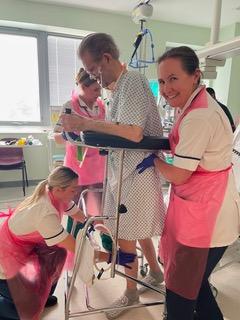
This was hard core, physically discomforting and psychologically challenging, day after day wash-rinse-repeat. I regard myself as resilient and mentally tough - Susan would say I’m belligerent and sheer bloody minded - but I couldn’t have worked through it without being optimistic and focused, along with the daily support and encouragement my family, doctors, consultants, and nursing staff. One team played a pivotal role in my recovery: the physios Their expertise, love and attention to my physical and mental recovery truly inspired me to dig deep day after day. They motivated, cajoled and pushed me. I owe so much to them.
A squad of four would breeze into my room, help me with a range of exercises and left me with a plan for the rest of the day for bed exercises. By June I was able to walk with a zimmer frame. I was then able to go to the hospital garden and get some fresh air and meet my dog for the first time in six months.
Other memories.
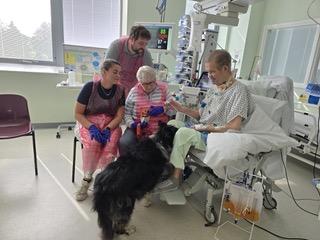
Hospital life in total isolation has its own bizarre rhythms and surreal milestones. One highlight was watching the England vs. India Test Match series alongside the Indian consultants and nurses who crammed into my room. They possessed an infectious passion for cricket, leading to hours of brilliant banter over LBW calls while my telemetry monitors beeped in rhythmic agreement.
A second highlight was a visit from Peter Hook, founding bassist of Joy Division and New Order. I had been wearing my Unknown Pleasures t-shirt during ward rounds, which caught the eye of a consultant who knew him. The doctor sent a message, and Hooky generously dropped by one Sunday afternoon. We spent ninety minutes having a natter about bass riffs, Manchester music history, and everything Joy Division.
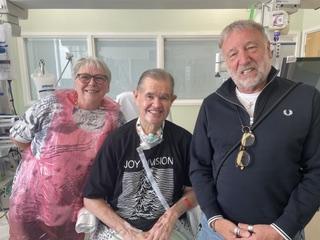
I also forged friendships with the support staff who kept the ward working. Christine, who delivered endless cups of tea and coffee from her trolley, had been working in the hospital for forty years. In a poetic twist of fate, she retired on the day I was discharged - the running joke was that she simply couldn't keep up with my relentless brew demands once my swallowing reflex was restored.
Highs and Lows, my family and my hospital diary.
During my 236-night stay in isolation, I had highs and lows, and some special people to support me:
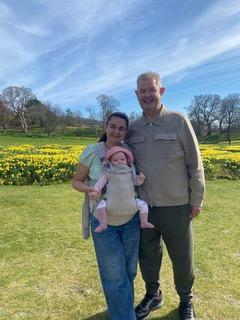
- My Best Day: April 17, when my daughter Katie told me she was pregnant. My first grandchild, Mia, was born on November 17. I had pre-natal scans of Mia on the wall of my room.
- My Worst Day: June 26, when the lead consultant came to me on his own, and explained that my condition was touch and go due to runaway infections. Aside from proposing to my wife, that will probably be the most memorable conversation of my life.
- My family. Susan, my wife was simply a rock, having her own emotions to deal with, but constantly keeping me going with a positivity that belied the emotional burden and reality of the situation. It’s our 40th wedding anniversary in 2027 so I wasn’t missing that party. Katie was a spark of light and energy, her natural disposition, and feeling her bump was magical. James, my son, was a source of motivation too, with chats about Trump's latest idiocy, his wedding plans and football updates.
- Hospital diary: Everyday of your stay is recorded in a diary completed by the day and night nursing staff. It’s a chronology of issues and progress. It’s a riveting read about your journey and helps you remember the people who cared for me. I cry every time I read a page.
Going Home.
Having experienced countless X-rays, endless blood tests, and many flexible bronchoscopy tubes gently threaded down my windpipe into my new lungs, I finally escaped home on September 3. I was almost discharged in early June, but I got sepsis and pneumonia and had to go through the entire recovery process again. The car journey home, having my tea in our kitchen and first night in bed with my wife was just unbelievable, especially the sausages and onion gravy. I felt like the luckiest man in the world, although Susan did make me stack the dishwasher. The silence was lovely, after so long surrounded by a working hospital environment. I isolated at home for the first three months as a precaution to avoid infection. My first trip out was to a supermarket, pushing the trolley for support as I walked around. Normality felt special. It’s lost its novelty now though.
How life has changed.
Twelve months on after leaving hospital, I am walking unaided, not an oxygen cylinder in sight, and my hair has regrown in all the expected places (plus a few unexpected ones due to steroids). I am more emotional and less patient than I used to be. Several times talking to friends relating to experience, I just start to cry. I cried a lot the first time I went back to the hospital to meet some of the nurses. My token big box of chocolate biscuits as a thank you seemed a meagre offering, but they scoffed the lot!
Ongoing care.
Once discharged, the daily burden of care shifts onto the patient, who must manage complex medication schedules, perform home spirometry and blood tests, and track vital signs. There is a continuous bridge between the patient's home and the transplant team via clinic visits and telephone support. I am on a cocktail of 20+ daily tablets, primarily to protect two things, and self- service spirometry:
- Acute organ rejection: The host immune system recognizes the new tissue as foreign and launches an attack. My tablets seek to fight organ rejection.
- Opportunistic infection: Powerful immunosuppressive regimens have lowered my defences, leaving me vulnerable to pathogens and infection.
- Lung function and spirometer tests. These become daily and weekly home procedures, with monthly,then at three and six monthly intervals at clinic. Detecting signals early provides a vital window in which immunosuppressive therapies can be modified to slow down or halt lapses in recovery.
Optimizing immunosuppressive drug dosage is a delicate balancing act. Insufficient medication leads to organ rejection, while excessive dosing causes nephrotoxicity, neurotoxicity, and serious infections. These insights assist clinicians in making precise, incremental adjustments to my daily drug dosages, maintaining therapeutic efficacy while minimizing systemic toxicity. It’s complex and there’s a lot going on, but it’s manageable and you build a routine which isn’t invasive.
Donor family contact.
I wrote to my organ donor's family, expressing my heartfelt gratitude, hoping that the positive story of my experience would provide them with some comfort for their loss. It’s on an anonymous basis. I got a lovely reply from my donor's widow which provided some details of my donor’s life and background. There were a number of stunning similarities in his hobbies, musical tastes and personality. If we’d ever met we would have been friends. Of course, this set me off crying again, but for good reason.
To families considering organ donation of a passed relative.
Choosing to consider organ donation during a time of immense grief is an act of extraordinary courage and profound compassion. When a family says yes, they offer the ultimate gift - hope and a second chance at life to another person and their loved ones, turning a moment of intense worry into a lasting legacy.
It is a deeply personal decision, and there is no right or wrong answer. Whatever you decide, know that your compassion, strength, and love during such a difficult time are recognised.
I think about my donor everyday and thank his widow and family for opening their hearts to a choice that has forever transformed my life and my family's.
What it means to me.
Clinical judgment, medical expertise, human empathy and love saved my life. Lung transplantation has evolved from experimental surgery into a highly sophisticated, data-driven discipline integrated across every stage of the clinical journey. There is no big pain, just significant discomfort in the post-op recovery and a big dose of self-help. You can’t afford to feel sorry for yourself, you’ve got another 25 years added onto your body clock, so make it happen.
Through all of this, the care delivered by the NHS folks was intimate, caring, and profoundly humbling.
The NHS ushers you into the world wrapped in a fluffy bundle, and zips you up when you leave, and works tirelessly in between to keep you breathing - literally!
It makes one reflect deeply on the privilege of living in a society that commits to looking after its people in their most vulnerable moments. Post operation I’m stepping back carefully and gently to normality. I’m bathing my granddaughter, back watching Burnley FC, active in my garden, met up for a 45th reunion with old university mates and had weekends away with Susan. I’ve been given a second chance of life and I’m feeling absolutely bloody marvellous.
Ian Brookes
1 October 2026